Addiction and relapse
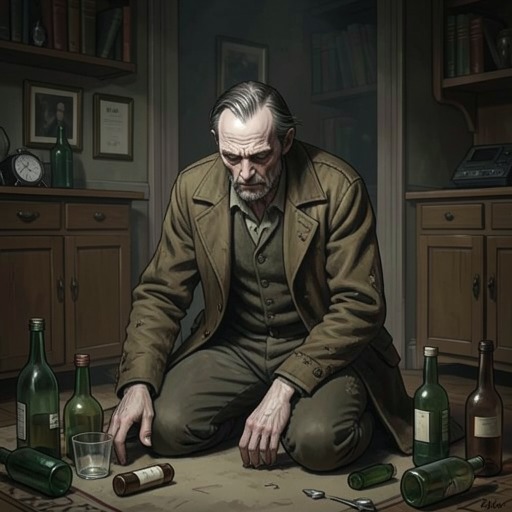
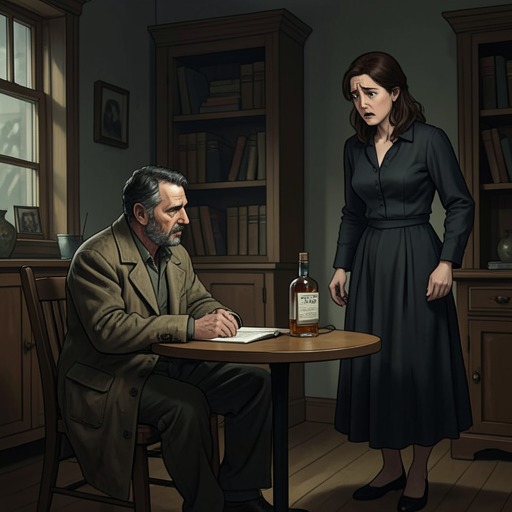
The Tenant of Wildfell HallAddiction and relapse in the novel are presented not as isolated lapses but as self-reinforcing cycles, sustained by craving, despair, remorse, and the encouragement of other people. Lord Lowborough’s compulsive gambling gives way to drinking and laudanum; his repeated efforts at moderation end in excess and renewed shame. Against this pattern, Helen Huntingdon’s effort to prevent her son from acquiring his father’s taste for alcohol shows how dependence can also be transmitted through domestic example—and how deliberately difficult that inheritance is to undo.
Lowborough’s gambling cycle
Before his marriage, Lord Lowborough became deeply attached to gambling despite repeatedly resolving to stop. Each new wager could be justified as the last: a small gain made him hope for a larger one, while a loss seemed to demand another play to recover what had just been lost. He treated a lucky turn as the beginning of better fortune, only for experience to overturn that expectation. The logic of the habit made stopping seem impossible at precisely the moments when stopping mattered most.
The losses eventually became so severe that his companions watched for the possibility that he might take his own life; some even remarked that his death would make little difference to their club. At last, Lowborough placed a large stake that he declared would be his final one whether he won or lost. He lost, and when a companion urged him to try again, he angrily refused and left. The apparent break came not from a gradual easing of desire but from a desperate decision made at the point of defeat.
Abstinence and substitution
Lowborough kept his oath against gambling, to the surprise of his companions, even as Grimsby tried to lure him back. But the relief of relinquishing play did not leave him free of dependence. After leaving the gaming room unsteadily, with liquor already affecting him, he began using drink to console himself. The narrator describes alcohol as another demon, nearly as difficult to escape as gambling, especially because Lowborough’s companions supported his cravings rather than his effort to resist them.
His abstinence from gambling was therefore real, but it coincided with the growth of another destructive habit. The change illustrates substitution rather than recovery: the activity he had renounced remained a model for how dependence worked, while drinking became a new means of managing distress. The club’s influence mattered. Its members could tempt him toward gambling, and, once drinking had taken hold, their company helped turn his private struggle into a socially reinforced pattern.
Relapse, remorse, and the culture of the club
Lowborough sometimes avoided the club and the gaming houses, but he remained weary of his own melancholy and eventually agreed to return on condition that he would not be tempted to drink. For a time he attended regularly and resisted alcohol with striking perseverance. Some members resented his abstinence: they disliked his presence at the table when he would not contribute to their amusement or join their drinking. Gilbert intervened on Lowborough’s behalf, asking the others to give him time, but also knew that Lowborough kept a private bottle of laudanum. His use of it fluctuated, as his drinking did: at times he abstained, and at others he indulged excessively.
The account makes clear that outward abstinence from one substance could conceal continued dependence elsewhere. Lowborough’s resolve did not remove the craving; it redirected or interrupted it, leaving him vulnerable to a different intoxicant. The club, meanwhile, treated resistance as an inconvenience and offered little support for sustained change. Gilbert’s intervention protects Lowborough temporarily from pressure to drink, but it does not resolve the private struggle that the laudanum bottle exposes.
Lowborough later tries moderation, but his pattern is unstable. A small excess can become a larger one; the misery of the next day then becomes a reason to drink again, ostensibly to repair its effects. Once his conscience brings him to a halt, remorse and fear burden his companions, who persuade him to drown his sorrows in wine or a stronger drink. After his first scruples have been overcome, he may become as dissolute as the rest of them, only to condemn himself more intensely when the episode passes. Each stage supplies the next: excess produces suffering, suffering becomes an excuse for renewed use, and renewed use deepens the shame that follows.
The social environment of dependence
The drinking episodes are shaped by a group that normalizes and encourages them. Grimsby urges Lowborough to try gambling again after he has lost; other club members dislike his refusal to drink; and his companions press alcohol on him when his remorse makes him difficult to bear. Their behavior complicates any account that treats relapse solely as a failure of individual will. Lowborough makes and breaks resolutions, but those around him repeatedly supply opportunities and social pressure that help turn a lapse into a pattern.
Huntingdon’s narration of Lowborough’s history is itself part of this social world: he recounts the gambling and drinking to Helen, while presenting the club’s conduct as amusement and its members’ excesses as entertainment. Helen responds with indignation, identifying Huntingdon as the first to tempt Lowborough. The contrast between her judgment and Huntingdon’s light manner exposes the moral evasions that allow destructive behavior to pass as conviviality. His account supplies evidence of the group’s complicity even when its teller treats that complicity casually.
From one generation to the next
The novel extends its concern from Lowborough’s repeated relapses to the danger of learned habits in the home. Helen says that she has had considerable difficulty breaking her son of harmful habits his father taught him. She reports that bad language now seldom passes his lips and that she has instilled an aversion to intoxicating liquor. His former fondness for drink troubles her because she remembers the damage suffered by both her own father and the child’s father; the concern is not abstract, but grounded in two family histories of alcohol’s consequences.
Helen does not simply prohibit the drink. She gives the boy as much wine as his father had allowed him, and as much as the boy wants, but secretly puts a small quantity of tartar emetic into each glass. The resulting nausea and depression make drinking an unpleasant experience, and he gradually loses his taste for it. Her method is a deliberate attempt to interrupt the association between alcohol and pleasure before his father’s example takes lasting hold. It also distinguishes learned appetite from inevitability: the child’s early fondness alarms Helen, but she believes the habit can still be altered.
The pattern and its limits
Across these episodes, dependence appears as a repeated sequence rather than a single choice: craving promises relief or recovery, resolution offers a temporary stop, and distress or social pressure opens the way back to use. Lowborough’s movement from gambling to alcohol and laudanum makes the possibility of substitution especially stark. His remorse does not by itself secure reform; it can become one more cause of drinking when his companions treat his distress as something to be drowned.
Helen’s intervention with her son supplies a different, though hardly uncomplicated, response. Instead of relying on prohibition, she changes the consequences the child associates with drinking, acting on the belief that indulgence can make a forbidden pleasure more attractive. The contrast joins addiction to both environment and education: companions can reinforce a cycle, parents can transmit its habits, and deliberate care may interrupt that transmission. The novel does not present Lowborough’s recovery in these episodes as complete or effortless; it emphasizes how hard abstinence is to sustain when craving, shame, and a permissive social circle continue to work together.